









📻 LISTEN LIVE Finance

Finance

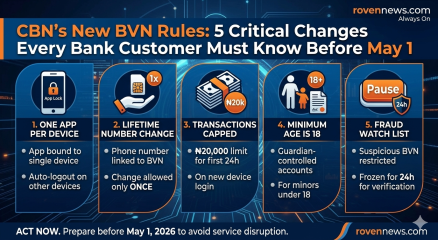
CBN’s New BVN Rules: 5 Critical Changes Every Bank Customer Must Know Before May 1

From May 1st, your banking app will be tied to a single device, and your ability to change your linked phone number will be severely restricted. These measures aim to stop criminals from hijacking accounts, but they also mean less flexibility for the average user [00:12, 01:44].   The 5 Major Changes:   One Device, One App: Your mobile banking app is now tied to one device at a time. If you log in on a new phone, the old one is automatically logged out. Switching between multiple phones for banking is no longer possible without extra verification [01:51]. The "One-Time" Phone Number Rule: You can now only change the phone number linked to your BVN once in your lifetime. This is a direct strike against SIM swap fraud. Tip: Use a stable, long-term number already linked to your NIN [02:35]. 24-Hour Transaction Cap: If you log into your app on a new device, your transactions will be limited to ₦20,000 for the first 24 hours. This acts as a "safety window" to prevent large-scale theft if your account is compromised [03:25]. 18+ Age Limit: The minimum age for an independent BVN is now 18 years. Accounts for minors must now be managed under the names of parents or guardians [03:08]. The 24-Hour "Fraud Watch": Any suspicious activity could trigger an automatic 24-hour hold on your BVN. During this time, your account may be frozen while the bank contacts you for verification [02:14].     🖋️ The Roven News "Accountability" Take "While security is the goal, the 'Ugly Truth' lies in the implementation. Previous policies like the Naira redesign and the cashless drive caused massive disruptions for those who complied, primarily because the digital infrastructure wasn't ready.   For our 'Pioneer' audience—especially digital entrepreneurs and students—these rules introduce significant friction. A 17-year-old running an online business may suddenly find themselves locked out, and the 'one-time phone number' rule ignores the reality of Nigeria’s fluctuating network reliability.   The CBN is tightening the system, but is the infrastructure robust enough to ensure legitimate users aren't squeezed out along with the fraudsters?" [04:58, 08:19]     Action Plan: What to do before May 1 Verify your Number: Ensure the phone number currently linked to your BVN is the one you intend to keep for life [04:17]. Update Now: If you need to change your linked number, do it at your bank before the May 1 deadline [04:26]. Check NIN Linkage: Make sure your BVN and NIN data match perfectly to avoid "mismatch" freezes.   Step-by-Step: The BVN-NIN Sync Checklist   Step 1: The Identity Audit (Check for Mismatches)   Before visiting the bank, you must ensure your data is consistent across both platforms. Mismatches in Date of Birth, Name Order, or Phone Number are the leading causes of account freezes.   Check your NIN: Dial *346# on your mobile phone and select the "NIN Retrieval" option (this costs ₦20). Verify that the name and phone number used match your banking records. Check your BVN: Dial *565*0# to retrieve your BVN. Note the phone number used to receive this code; this is your primary linked number.   Step 2: The "Phone Number" Lock-In   Under the new rules, you can only change your linked phone number once in your lifetime.   The Golden Rule: Ensure the SIM card linked to your BVN is registered in your name and tied to your NIN via your mobile service provider (MTN, Airtel, etc.). If you must change it: Visit your primary bank branch NOW. Do not wait for May 1st, as the system will become significantly more rigid once the deadline passes.   Step 3: Device Binding Preparation   Because your app will now be tied to a single device, you need to ensure your main "banking phone" is secure.   Logout of Secondary Devices: If you have your banking app on a tablet and a phone, choose one. The new system will automatically log you out of the older session, but doing it manually now prevents "suspicious activity" flags later. Biometric Setup: Ensure your phone’s facial recognition or fingerprint scanner is active. The new CBN rules prioritize biometric login over simple passwords for "new device" verifications. Step 4: The 24-Hour Buffer Test   If you plan on buying a new phone soon, do it before May 1st. Why? After the deadline, logging into a new device triggers a 24-hour transaction cap of ₦20,000. If you have an urgent business payment to make, a new phone could trap your capital for a full day.     🖋️ The Roven News "Value" Warning "For the Nigerian diaspora and digital 'Pioneers,' the window for correction is closing. If you are abroad and your Nigerian SIM is inactive or not linked to your NIN, you risk losing access to your local accounts entirely.   Most importantly, remember that identity synchronization is the only insurance against the '24-hour fraud watch list'. If the CBN system detects a conflict between your bank data and your national ID data, it will hit the 'pause button' on your account. Sync now, or stay locked out." Quick Links for Pioneers: NIN Self-Service: Visit the NIMC portal to modify data if your name is spelled differently than in your bank records. Bank Apps: Most tier-1 banks (GTB, Zenith, Access) have now added an "Update BVN/NIN" button in their mobile apps. Check yours today.

Admin April 28, 2026 0
CBN should revisit its new POS rule

The recent directive by the Central Bank of Nigeria (CBN) concerning new limits and fees associated with Point of Sale (POS) transactions has sparked widespread concern among stakeholders. Designed ostensibly as a measure to enhance financial inclusion and stabilize the cashless economy, the regulation imposes a stringent daily transaction limit and increases charges for individuals and businesses exceeding set thresholds. However, the policy's implementation has been met with considerable resistance. Many Nigerians, especially those in underserved regions, rely on POS services due to the limited availability of traditional banking infrastructures. This new rule risks alienating a significant portion of the population, inadvertently excluding them from the financial system CBN aims to bolster.   For small business owners, this change presents an additional layer of financial strain. The hike in charges for transactions above the stipulated limits means that merchants could face increased operational costs, a burden that could potentially be transferred to consumers. In a fragile economy still recovering from the effects of a global pandemic, increased costs could trigger inflationary pressures, reducing the real incomes of individuals and diminishing their purchasing power. Moreover, by penalizing high-volume transactions, the CBN could inadvertently discourage business expansion and growth—a counterproductive outcome for a nation seeking economic revitalization.   It is imperative that the CBN reevaluates this policy, taking into consideration the diverse economic realities faced by different segments of the population. Engaging with stakeholders through consultations and feedback mechanisms could provide valuable insights and lead to a more balanced approach. This revision could strike a fine line between regulatory oversight and economic inclusivity, ensuring that financial reforms foster growth rather than stifling it. By adjusting the POS regulation, the CBN can achieve its objectives without negatively impacting the economy or disenfranchising the very individuals it seeks to empower.

Admin April 25, 2026 0
Dangote Flour
Dangote Sugar shareholders approve N500bn Rights Issue for strategic expansion

Shareholders of Dangote Sugar have given their approval for a significant financial maneuver aimed at bolstering the company’s expansion plans. In a decisive move, the board has acquired the green light to embark on a N500 billion Rights Issue. This move is aimed at enhancing the company's capital base, providing the necessary financial muscle to pursue strategic initiatives that are expected to increase market share and boost profitability. The approval underscores the shareholders' confidence in Dangote Sugar’s growth trajectory and its plans to secure a more dominant position in the highly competitive sugar industry.   This strategic expansion is not just about increasing production capacity but also about making significant inroads into new markets and enhancing operational efficiencies. According to company insiders, the funds raised through this Rights Issue will be channeled into upgrading current production facilities and exploring opportunities for acquisitions that align with the company's growth objectives. Dangote Sugar has been strategically positioning itself to not only meet the rising demand for sugar in the local market but also to extend its reach to neighboring regions. The adoption of advanced technology is at the forefront of these enhancements, ensuring that the company remains at the cutting edge of sugar production.   With this approval, Dangote Sugar is set to redefine its business model and strengthen its market presence significantly. Stakeholders are optimistic that these strategic investments will lead to increased efficiency and enhanced profitability in the long run. The company’s management has consistently communicated its commitment to achieving sustainable growth and delivering value to its shareholders. The decision to pursue a N500 billion Rights Issue is seen as a prudent step in aligning financial resources with the company’s ambitious future plans, ultimately fostering a more resilient and competitive market standing for Dangote Sugar.

Admin April 17, 2026 0
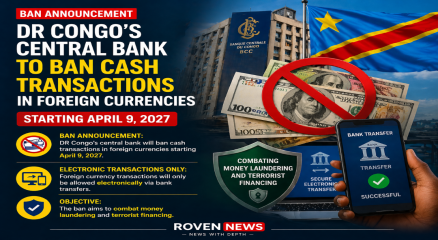
DR Congo to Ban Use of Foreign Currencies in Cash Transactions by 2027

The Central Bank of the Congo has announced a sweeping policy to phase out the use of foreign currencies in everyday cash transactions, marking a significant shift in the country’s monetary system. Under the new directive, which takes effect on April 9, 2027, individuals and businesses will no longer be allowed to conduct cash transactions in foreign currencies such as the U.S. dollar. Commercial banks will also be prohibited from physically importing foreign currency. However, foreign currencies may still be used for electronic transactions conducted through the banking system. The policy is part of broader efforts to strengthen financial oversight, particularly in combating money laundering and terrorist financing. It also reflects the government’s long-standing attempt to restore confidence in the national currency, the Congolese franc. Foreign currencies, especially the U.S. dollar, have dominated the country’s economy since the 1990s, when hyperinflation severely weakened the local currency. Today, most transactions exceeding modest amounts are conducted in dollars, highlighting persistent public distrust in the franc, which has significantly depreciated over time. Previous efforts by authorities to reduce reliance on foreign currencies have met limited success. Measures introduced in recent years, including directives requiring electronic payment systems to operate exclusively in the local currency, have not fully reversed dollarization. Despite its vast natural resources and global economic interest, the Democratic Republic of the Congo continues to face deep economic challenges, with widespread poverty and a fragile financial system complicating reforms aimed at stabilizing its currency.

may osakwe April 11, 2026 0
DR Congo to ban foreign currency cash transactions
DR Congo's Bold Move: Dollar Ban in Cash Transactions

The Core Story: Ban Announcement: DR Congo's central bank will ban cash transactions in foreign currencies starting April 9, 2027. Electronic Transactions Only: Foreign currency transactions will only be allowed electronically via bank transfers. Objective: The ban aims to combat money laundering and terrorist financing.   The Deep Dive: The Democratic Republic of Congo is making a significant economic shift by banning the use of the US dollar and other foreign currencies for cash transactions. Starting April 9, 2027, all cash dealings must be conducted in the local Congo franc, as announced by the Central Bank of Congo (BCC) Governor, Andre Wameso.   This move is part of a long-standing effort to strengthen the Congo franc, which has been overshadowed by the dollar since the 1990s when hyperinflation plagued the economy. At one point, inflation reached a staggering 2,000 percent, prompting the widespread adoption of the dollar for transactions over $5. The Central Bank's decision also aligns with global efforts to curb money laundering and terrorist financing.   However, this isn’t DR Congo’s first attempt; similar measures were put in place in 2024, urging banks to adapt electronic payment systems for local currency use.

Admin April 10, 2026 0
AI Generated Image Viral N5,000 note featuring Tinubu is fake — CBN
CBN Clarifies: Viral N5,000 Tinubu Note is a Hoax

The Core Story: The Central Bank of Nigeria (CBN) has officially declared a viral image of an N5,000 note featuring President Bola Tinubu as fake. - The image circulated widely on social media, causing confusion and speculation among Nigerians. - CBN confirmed that no such denomination has been issued and urged the public to rely on official communications.   The Deep Dive:   The rumor mill has been churning with excitement and skepticism as an image of an N5,000 note adorned with President Bola Tinubu's portrait made its rounds on social media platforms. The image, which quickly gained traction, had many Nigerians buzzing about the potential introduction of a higher denomination in the country's currency. However, the Central Bank of Nigeria (CBN) swiftly put these rumors to rest. In an official statement, the CBN categorically denied the existence of any N5,000 note, emphasizing that such a note has never been printed or issued.   The bank urged citizens to exercise caution and verify information through official channels to prevent the spread of misinformation. This isn't the first time fake currency designs have emerged online, leading to public discourse and confusion. The CBN has consistently advocated for financial literacy and awareness to combat such misleading information.  

Admin April 10, 2026 0
Senegal and Nigeria Deepen Energy Ties as Ministerial Visit Signals New Era of African Collaboration
A high-level working visit between Senegal and Nigeria is laying the groundwork for deeper cooperation in refining, gas monetization, policy development and intra-African energy trade

Senegal and Nigeria are strengthening bilateral energy cooperation following a high-level working visit by Senegal’s Minister of Energy Birame Soulèye Diop and representatives from national oil company (NOC) Petrosen to Abuja this week. The Senegalese delegation met with Nigeria’s Minister of State for Petroleum Resources (Oil) Senator Heineken Lokpobiri and the Nigerian National Petroleum Company (NNPC), with the parties committing to strengthening cooperation across various fields. The visit reflects a growing commitment by African producers to work together on refining, policy development, gas monetization and NOC collaboration – a strategy that is expected to strengthen African energy growth and industrialization.    Representing the voice of the African energy sector, the African Energy Chamber (AEC) has welcomed the collaboration, noting that stronger ties between African producers are critical at a time when the continent is seeking to attract investment, build infrastructure and expand intra-African energy trade. Greater cooperation between ministries and NOCs such as Petrosen and NNPC has the potential to support knowledge sharing, strengthen institutional capacity and accelerate the development of strategic projects across the oil and gas value chain, from upstream production to refining and gas commercialization. The collaboration also comes as African countries work to operationalize the Africa Energy Bank, with Senegal having already paid its capital contribution and positioning itself as an active participant in financing African energy projects.   “This is exactly the kind of collaboration Africa needs. When countries like Senegal and Nigeria work together – sharing knowledge, building infrastructure, strengthening NOCs and improving policies – we create an environment where investment can thrive and where Africa can take control of its energy future. Strong partnerships between African nations will be the foundation of energy security, industrialization and economic growth across the continent,” states NJ Ayuk, Executive Chairman, AEC. Strong partnerships between African nations will be the foundation of energy security, industrialization and economic growth across the continent   The collaboration comes as a pivotal time for West Africa, with both Senegal and Nigeria looking at expanding their respective upstream and downstream markets. For Senegal, collaboration with Nigeria could serve as a catalyst for stronger governance structures and streamlined licensing procedures, enhancing the country’s attractiveness for foreign capital as it looks to scale production and bolster regional trade. Recent milestones have not only positioned Senegal as a producing market but demonstrated its potential for scalable investments.   Following the start of operations at the Sangomar oilfield and Greater Tortue Ahmeyim (GTA) LNG development in 2024 and 2025 respectively, Senegal has been working to scale output. Sangomar production has stabilized at around 100,000 bpd, with 36.1 million barrels generated in 2025 alone. From February 2025 to February 2026, GTA exported 24 LNG cargoes, alongside 1.6 million barrels of condensate marketed internationally.   Looking ahead, the country is looking at expanding both facilities, while advancing the development of the Yakaar-Teranga offshore project. The country is also looking at monetizing onshore resources. Petrosen has launched a $100 million exploration campaign targeting underexplored onshore basins, with goals to identify new crude discoveries by late-2026 through seismic acquisition, basin modeling and exploratory drilling programs.   Nigeria, meanwhile, remains Africa’s largest oil producer and is pursuing ambitious production targets of around 2 million bpd while simultaneously expanding its gas and refining sectors. To achieve this goal, the country rolled out a 2025 licensing round featuring 50 frontier and one deepwater block. The round targets $10 billion in investment over the next decade. In tandem, the country is re-engaging IOCs in deepwater exploration, with Chevron, ExxonMobil and Shell all advancing offshore projects. The NNPC is also pursuing an ambitious upstream drive, targeting $30 billion in investments by 2030.   Downstream, the country is looking at expanding the 650,000 bpd Dangote Refinery’s capacity to 1.4 million bpd, while the issuance of Permits to Access Flare Gas to 28 awardees in December 2025 is set to unlock $2 billion in gas investments. Cooperation with Senegal therefore aligns with Nigeria’s broader strategy of strengthening African energy markets while expanding regional trade in both crude and refined products.   The strengthening of ties between Senegal and Nigeria signals a broader shift taking place across Africa’s energy sector, where collaboration – rather than competition – is increasingly being seen as the key to unlocking investment, developing infrastructure and ensuring long-term energy security. By working together on refining, gas monetization, policy development and energy financing, Senegal and Nigeria are helping to set a precedent for how African energy markets can grow stronger through partnership, integration and shared strategic objectives.

Admin April 24, 2026 0
The First Group Hospitality and MIDROC Investment Group Sign Master Agreement for 10 Properties in Ethiopia
The agreement aligns with Dubai-headquartered The First Group Hospitality’s strategy to expand its third-party and white-label management platform in Africa

NAIROBI, Kenya, March 31, 2026/ --&nbspThe First Group Hospitality and MIDROC Investment Group have signed a master agreement to develop and operate 10 properties across Ethiopia, marking a significant growth of internationally branded hospitality assets in the East African country. The agreement was formalized during the Future Hospitality Summit Africa (www.FutureHospitality.com)  in Nairobi.   The portfolio includes independent and Marriott-branded franchised properties in key urban and gateway destinations, including Addis Ababa, Hawassa, Bahir Dar, Jimma, Langano and Danbi. In total, the hotels are expected to deliver approximately 1,140 keys, with openings phased between 2026 and 2031.   The agreement aligns with Dubai-headquartered The First Group Hospitality’s strategy to expand its third-party and white-label management platform in Africa. For Addis Abababased MIDROC Investment Group, the partnership supports the continued growth of its hospitality arm in Ethiopia.   Commenting on the agreement, David Thomson, Senior Vice President - Development of The First Group Hospitality, said: “Ethiopia represents one of the most compelling hospitality growth markets in East Africa, supported by ongoing investment in tourism and infrastructure. Our agreement with MIDROC Investment Group allows us to establish a substantial footprint in the market alongside a partner with deep local expertise, while delivering high-performing assets and creating long-term value across key destinations.”   “We are delighted to partner with The First Group Hospitality, combining their strong track record in development and operations with a shared vision to drive sustainable tourism growth across Ethiopia. This collaboration also reflects our commitment to developing Ethiopian talent and showcasing the country’s rich cultural heritage through authentic hospitality experiences,” said Solomon Zewdu, Deputy Chief Executive Officer of MIDROC Hospitality. “We see strong long-term demand across both business and leisure segments, and this partnership positions us to respond at scale.”   The announcement follows a series of recent developments by The First Group Hospitality, including the launch of Ciel Dubai Marina, Vignette Collection by IHG - the world’s tallest hotel - and the signing of franchise agreements with Marriott International, Radisson Hotel Group and IHG.

Admin April 24, 2026 0
SAIC Coca-Cola System
The announcement was made by Luis Felipe Avellar, president of The Coca-Cola Company’s Africa operating unit, at the sixth South Africa Investment Conference (SAIC) in Johannesburg

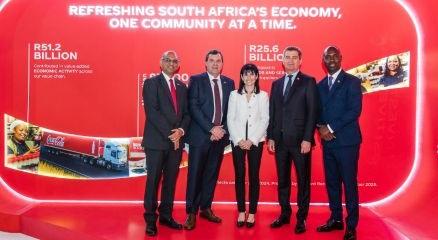
JOHANNESBURG, South Africa, March 31, 2026/ --&nbspThe Coca-Cola system in South Africa, comprised of Coca-Cola (http://www.Coca-ColaCompany.com) and its authorized bottlers - Coca-Cola Beverages South Africa and Coca-Cola Peninsula Beverages - today announced a planned R17.6 billion investment in South Africa through 2030.   The announcement was made by Luis Felipe Avellar, president of The Coca-Cola Company’s Africa operating unit, at the sixth South Africa Investment Conference (SAIC) in Johannesburg.   The investment will support expanded production capacity, strengthen distribution and accelerate innovation across the Coca-Cola system’s value chain – reinforcing Coca-Cola’s confidence in the South African market and its long-term economic prospects.   With a presence across the country, Coca-Cola has been investing in South Africa’s people and communities for nearly a century. Speaking at the conference, Avellar said: “Our R17.6 billion investment reflects our strong belief in South Africa’s potential and our commitment to growing alongside the communities we serve. We hire locally, produce locally, distribute locally and, where possible, source locally, helping to build a stronger, more integrated economy in South Africa.”   The announcement builds on the findings of a comprehensive socio-economic impact study by global consulting firm Steward Redqueen. The study highlights the scale of the Coca-Cola system’s contribution to South Africa’s economy, employment and communities.   The research reveals that the Coca-Cola system in South Africa, a broad network of local suppliers, distributors and retailers, contributed R51.2 billion in value-added economic activity in 2024.   Through its value chain, the Coca-Cola system supported over 87,000 jobs in sectors like retail, agriculture, manufacturing, transport and services. This included 7,822 direct jobs within the system and an estimated 79,300 jobs supported through suppliers, partners and customers. This means that for every direct job created by the system, 10 more jobs were supported across South Africa’s economy.   The study also highlights the Coca-Cola system’s strong local integration, with R25.6 billion of goods and services sourced from suppliers in South Africa in 2024.   This local procurement supports industries as diverse as sugar production, packaging, transportation and marketing, reinforcing the Coca-Cola system’s role as a partner for growth in South Africa’s economic development.   “South Africa remains one of our most strategic markets in Africa—the beginning of a legacy that dates back to Coca-Cola’s first entry on the continent in 1928. These findings reaffirm the Coca-Cola system’s role as a key driver of shared value and sustainable growth within the South African economy,” said Sunil Gupta, CEO, Coca-Cola Beverages Africa.   The study measured the direct, indirect and induced economic impacts of the Coca-Cola system in South Africa, combining company operational data with trusted third-party economic sources. The analysis demonstrates how Coca-Cola’s local operations ripple across the economy – from farmers growing sugarcane to retailers selling beverages – creating jobs, generating income and building opportunities.   Beyond economic impact, South Africa is one of the beneficiaries of the Coca-Cola system’s Africa Water Stewardship Initiative (http://apo-opa.co/4tlYwkN), a nearly $25 million investment through 2030 to help address critical water-related challenges in local communities in 20 African countries.   “We are optimistic about South Africa’s future, with a continued focus on investing in our business and in initiatives that support economic inclusion and lasting local prosperity,” Charl Goncalves, MD, Coca-Cola Peninsula Beverages, concluded.   The investment announcement follows the recent news of Coca-Cola HBC’s agreement to acquire a majority stake in Coca-Cola Beverages Africa, underpinning the importance of South Africa to the Coca-Cola system, and the growth opportunities the country presents.   Zoran Bogdanovic, CEO of Coca-Cola HBC, said: “Congratulations to the Coca-Cola system on this investment announcement. After the transaction completes, we look forward to continuing the great work of Coca-Cola Beverages South Africa in the years to come.” Distributed by APO Group on behalf of Coca-Cola.     About The Coca-Cola Company: The Coca-Cola Company (NYSE: KO) is a total beverage company with products sold in more than 200 countries and territories. Our company’s purpose is to refresh the world and make a difference. We sell multiple billion-dollar brands across several beverage categories worldwide. Our portfolio of sparkling soft drink brands includes Coca-Cola, Sprite and Fanta. Our water, sports, coffee and tea brands include Dasani, smartwater, vitaminwater, Topo Chico, BODYARMOR, Powerade, Costa, Georgia, Fuze Tea, Gold Peak and Ayataka.   Our juice, value-added dairy and plant-based beverage brands include Minute Maid, Simply, innocent, Del Valle, fairlife and AdeS. We’re constantly transforming our portfolio, from reducing sugar in our drinks to bringing innovative new products to market. We seek to positively impact people’s lives, communities and the planet through water replenishment, packaging recycling, sustainable sourcing practices and carbon emissions reductions across our value chain. Together with our bottling partners, we employ more than 700,000 people, helping bring economic opportunity to local communities worldwide.   Learn more at www.Coca-ColaCompany.com and follow us on Instagram (http://apo-opa.co/4v4a5yF), Facebook (http://apo-opa.co/4uWErmB) and LinkedIn (http://apo-opa.co/3NOELmT). SOURCE Coca-Cola

Admin April 24, 2026 0
Popular News
Protect the Press! NGE and SERAP Petition Tinubu Over Wike’s "I Would Have Shot Him" Remark to Seun Okinbaloye

The Conflict:   The Nigeria Guild of Editors (NGE) and SERAP have officially called on President Bola Tinubu to investigate what they describe as a "downward spiral" of media intimidation. The spark? Recent comments by FCT Minister Nyesom Wike directed at Channels TV’s Seun Okinbaloye.   What Triggered the Row?   During a media chat, Minister Wike expressed intense anger over Okinbaloye’s analysis on Politics Today. The Minister stated he was so "surprised" by the journalist’s comments regarding the 2027 elections that he "would have shot him" if he could reach through the television screen.   While Wike later claimed the statement was a figure of speech, the NGE and SERAP argue that such language from a high-ranking official:   Chills Public Interest: It creates a climate of fear for journalists.   Encourages Impunity: It emboldens others to harass the media.   Violates the Constitution: Section 39 guarantees the right to hold opinions and impart ideas without interference.   The Stats: Nigeria’s Media Climate The joint statement highlighted a worrying trend for the country:   Rankings Dropped: Nigeria fell 10 places to 122nd in the 2025 World Press Freedom Index.   Attacks on the Rise: At least 56 journalists were arrested or assaulted in August 2024 alone while covering protests.   Constitutional Duty: The groups reminded the government that Section 22 of the Constitution specifically mandates the press to hold the government accountable to the people.

Sunday Groove: Fine-Tuned Melodies Take Center Stage at Shenix Lounge & Grills!

🎶 Sunday Groove: Fine-Tuned Melody Takes Over Shenix Lounge & Grills!   Ibadan, are you ready for the ultimate weekend climax?   If you’re looking for the perfect spot to unwind with your spouse, catch up with friends, or treat the family to an unforgettable evening, Shenix Lounge & Grills is the only destination this Sunday!   This May 3rd, 2026, we are turning up the heat with a spectacular live music journey tagged "Fine-Tuned Melody." It’s time to dust off your dancing shoes and prepare for a night of rhythm, soul, and high-energy performances.   🌟 The All-Star Lineup   We’ve curated a "Pioneer" list of performers to ensure every beat hits home: 🔥 Imisi Gold (The Headliner) 🎤 Bayo Amos 🎵 Luku Boy 🎹 Olabanji Melody 👯‍♂️ Ransom Twins     📍 Event Details Date: Sunday, 3rd May 2026 Time: 5:00 PM Sharp Location: No. 4, Idi-oro, Alao-Akala Express, Opposite Health Centre, Agara, Ibadan. Security: Maximum security is guaranteed, so you can focus entirely on the vibe!

The Blues are Coming! Chelsea FC Announces Historic Lagos Takeover this May

The Simple Breakdown: Premier League giants Chelsea FC are officially heading to Lagos this May. It’s not for a match, but for a massive "Fan Engagement" festival tagged "The Famous CFC in Lagos." Even better? Super Eagles and Chelsea legend Victor Moses is coming along to host the party.   3 Things Every Chelsea Fan Needs to Know:   1. What’s Happening? Chelsea is bringing a "Watch Party" experience to Lagos. Think of it as a stadium-style atmosphere right in the heart of the city. There will be: A live viewing of a Chelsea match as the season reaches its climax. Q&A Sessions: You get to hear from Victor Moses himself. Prizes: Opportunities to win jerseys and merchandise signed by current Chelsea stars.   2. The Victor Moses Connection Having the 2013 AFCON winner and Premier League champion on the ground makes this special. It’s the first time the club is doing an official event of this scale in Nigeria, which is currently the fifth stop on their global fan tour this season.   3. Joining the Legends Lagos is used to "Football Royalty." Chelsea follows in the footsteps of Thierry Henry (who became the "Igwe of Football" in 2017) and Rio Ferdinand. This visit proves that Nigeria remains one of the biggest hubs for the "Blue" family worldwide.   How to Attend (The Step-by-Step):   You can't just show up at the gate! To get an invite: Go to the official Chelsea FC website. Search for the "International Fan Programme" or the Lagos event page. Fill out the application form to register your interest.

Cancer Survivor Speaks Out: "Blessing CEO Doctored My Report to Scam the Public" — NMA Confirms Fraud

The Scandal: Prominent social media influencer Blessing CEO (Blessing Okoro) is facing a massive backlash after the Nigerian Medical Association (NMA) and a cancer survivor, Deborah Mbara, accused her of faking a Stage 4 breast cancer diagnosis. The NMA has confirmed that the medical report Blessing used to solicit donations was a "manipulated and doctored" version of Mbara's actual 2025 diagnosis.   How the "Trap" Was Set:   The Makeup Artist Connection: Mbara, a makeup artist who previously worked for Blessing, reached out to the influencer last week to offer support after Blessing claimed she was dying of cancer. The "Comparison" Trick: Blessing allegedly asked Mbara to send her original 2025 medical report from Xinus Medical Diagnostics under the guise of "comparing results" with her own doctor. The Forgery: Instead of comparing them, Mbara alleges Blessing doctored the document, swapped the names, and posted it online to back her claim of raising ₦13 million in donations.   The NMA's Verdict: The Delta State chapter of the NMA issued a scathing statement, clarifying that Xinus Medical Diagnostics never issued a report to Blessing Okoro. They traced the original document back to May 9, 2025, confirming it belonged strictly to Deborah Mbara.

Tensions Rise as PDP and Turaki's Camp Clash Over Makinde's 'Operation Wetie' Remark

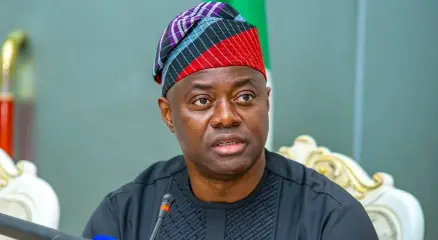
The political landscape in Nigeria has recently been stirred by a provocative comment from Governor Seyi Makinde, and it has sparked a fiery exchange between Wike-backed PDP members and Turaki’s camp. Makinde’s reference to “Operation Wetie,” a term harking back to a period of political unrest in Western Nigeria during the 1960s, has incited formidable reactions. Supporters of Nyesom Wike, who are embedded within the PDP, interpreted Makinde’s remarks as inflammatory, potentially exacerbating tensions within the party. They argue that such comments could unearth historical animosities and detract from the political unity required for navigating contemporary challenges facing the state and the country at large.   Turaki’s camp, on the other hand, has seized the opportunity to mount a robust defense while countering the implications of Makinde’s statement. They contend that invoking the past serves little purpose other than resurrecting wounds that were thought to be healing. The camp remains steadfast in its belief that the PDP should focus on fostering an inclusive discussion that highlights progressive policies. Advocates within Turaki’s circle emphasize a forward-thinking approach, promoting strategies aimed at economic development and social cohesion, rather than getting mired in historical disputes that have the potential to fracture party solidarity.   This exchange underscores a broader issue within the party, wherein internal factions appear to be at odds over strategies and rhetoric leading up to key elections. While Wike-backed members express concern over maintaining a peaceable and united front, Turaki’s faction advocates for addressing controversial topics head-on but in a manner that cultivates understanding and growth. The divergent responses to Makinde's comment could shape the narrative surrounding intra-party politics, revealing the complexities of alliances and the challenges of steering a large, diverse political entity through a tumultuous electoral landscape. As the situation develops, it will be crucial for party leaders to mediate and guide discussions that maintain the integrity and objectives of the PDP whilst honoring the lessons of history.

Top news of the week

Seun Okinbaloye
News & Headlines

Protect the Press! NGE and SERAP Petition Tinubu Over Wike’s "I Would Have Shot Him" Remark to Seun Okinbaloye

Admin April 25, 2026 0

Voting poll

Should religious institutions accept and distribute branded government palliatives?