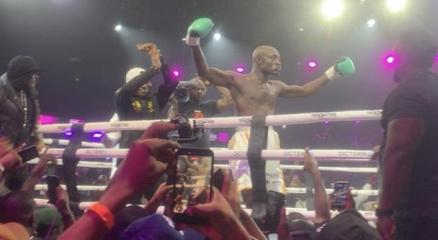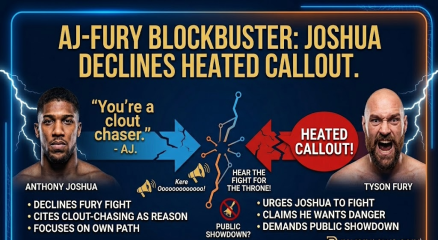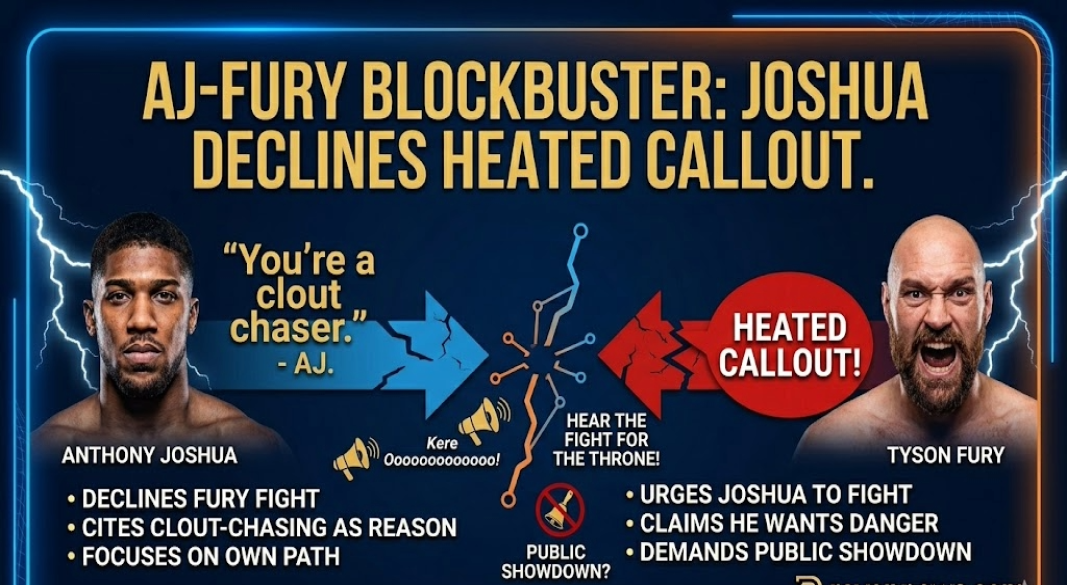


Anthony Joshua has declined an immediate in-ring challenge from longtime rival Tyson Fury following Fury’s dominant victory over Arslanbek Makhmudov at the Tottenham Hotspur Stadium.
Fury used the post-fight moment to call out Joshua for a highly anticipated all-British heavyweight clash, but Joshua chose not to engage publicly and later dismissed the approach, criticizing Fury’s motives.
Despite the exchange, Joshua maintained that he remains open to the fight, emphasizing that any agreement must go through proper negotiations rather than spontaneous in-ring declarations.
Joshua also indicated that personal matters and a recent incident have influenced his current focus and timeline for returning fully to the ring. He reiterated that he is not avoiding the matchup but prioritizing resolving off-ring issues while monitoring developments in the heavyweight division.
The potential bout between the two fighters has been discussed for over a decade but has yet to materialize, leaving fans still awaiting a confirmed showdown.
The Conflict: The Nigeria Guild of Editors (NGE) and SERAP have officially called on President Bola Tinubu to investigate what they describe as a "downward spiral" of media intimidation. The spark? Recent comments by FCT Minister Nyesom Wike directed at Channels TV’s Seun Okinbaloye. What Triggered the Row? During a media chat, Minister Wike expressed intense anger over Okinbaloye’s analysis on Politics Today. The Minister stated he was so "surprised" by the journalist’s comments regarding the 2027 elections that he "would have shot him" if he could reach through the television screen. While Wike later claimed the statement was a figure of speech, the NGE and SERAP argue that such language from a high-ranking official: Chills Public Interest: It creates a climate of fear for journalists. Encourages Impunity: It emboldens others to harass the media. Violates the Constitution: Section 39 guarantees the right to hold opinions and impart ideas without interference. The Stats: Nigeria’s Media Climate The joint statement highlighted a worrying trend for the country: Rankings Dropped: Nigeria fell 10 places to 122nd in the 2025 World Press Freedom Index. Attacks on the Rise: At least 56 journalists were arrested or assaulted in August 2024 alone while covering protests. Constitutional Duty: The groups reminded the government that Section 22 of the Constitution specifically mandates the press to hold the government accountable to the people.
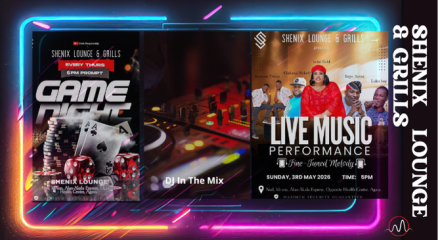
🎶 Sunday Groove: Fine-Tuned Melody Takes Over Shenix Lounge & Grills! Ibadan, are you ready for the ultimate weekend climax? If you’re looking for the perfect spot to unwind with your spouse, catch up with friends, or treat the family to an unforgettable evening, Shenix Lounge & Grills is the only destination this Sunday! This May 3rd, 2026, we are turning up the heat with a spectacular live music journey tagged "Fine-Tuned Melody." It’s time to dust off your dancing shoes and prepare for a night of rhythm, soul, and high-energy performances. 🌟 The All-Star Lineup We’ve curated a "Pioneer" list of performers to ensure every beat hits home: 🔥 Imisi Gold (The Headliner) 🎤 Bayo Amos 🎵 Luku Boy 🎹 Olabanji Melody 👯♂️ Ransom Twins 📍 Event Details Date: Sunday, 3rd May 2026 Time: 5:00 PM Sharp Location: No. 4, Idi-oro, Alao-Akala Express, Opposite Health Centre, Agara, Ibadan. Security: Maximum security is guaranteed, so you can focus entirely on the vibe!
The Simple Breakdown: Premier League giants Chelsea FC are officially heading to Lagos this May. It’s not for a match, but for a massive "Fan Engagement" festival tagged "The Famous CFC in Lagos." Even better? Super Eagles and Chelsea legend Victor Moses is coming along to host the party. 3 Things Every Chelsea Fan Needs to Know: 1. What’s Happening? Chelsea is bringing a "Watch Party" experience to Lagos. Think of it as a stadium-style atmosphere right in the heart of the city. There will be: A live viewing of a Chelsea match as the season reaches its climax. Q&A Sessions: You get to hear from Victor Moses himself. Prizes: Opportunities to win jerseys and merchandise signed by current Chelsea stars. 2. The Victor Moses Connection Having the 2013 AFCON winner and Premier League champion on the ground makes this special. It’s the first time the club is doing an official event of this scale in Nigeria, which is currently the fifth stop on their global fan tour this season. 3. Joining the Legends Lagos is used to "Football Royalty." Chelsea follows in the footsteps of Thierry Henry (who became the "Igwe of Football" in 2017) and Rio Ferdinand. This visit proves that Nigeria remains one of the biggest hubs for the "Blue" family worldwide. How to Attend (The Step-by-Step): You can't just show up at the gate! To get an invite: Go to the official Chelsea FC website. Search for the "International Fan Programme" or the Lagos event page. Fill out the application form to register your interest.
The Scandal: Prominent social media influencer Blessing CEO (Blessing Okoro) is facing a massive backlash after the Nigerian Medical Association (NMA) and a cancer survivor, Deborah Mbara, accused her of faking a Stage 4 breast cancer diagnosis. The NMA has confirmed that the medical report Blessing used to solicit donations was a "manipulated and doctored" version of Mbara's actual 2025 diagnosis. How the "Trap" Was Set: The Makeup Artist Connection: Mbara, a makeup artist who previously worked for Blessing, reached out to the influencer last week to offer support after Blessing claimed she was dying of cancer. The "Comparison" Trick: Blessing allegedly asked Mbara to send her original 2025 medical report from Xinus Medical Diagnostics under the guise of "comparing results" with her own doctor. The Forgery: Instead of comparing them, Mbara alleges Blessing doctored the document, swapped the names, and posted it online to back her claim of raising ₦13 million in donations. The NMA's Verdict: The Delta State chapter of the NMA issued a scathing statement, clarifying that Xinus Medical Diagnostics never issued a report to Blessing Okoro. They traced the original document back to May 9, 2025, confirming it belonged strictly to Deborah Mbara.
The political landscape in Nigeria has recently been stirred by a provocative comment from Governor Seyi Makinde, and it has sparked a fiery exchange between Wike-backed PDP members and Turaki’s camp. Makinde’s reference to “Operation Wetie,” a term harking back to a period of political unrest in Western Nigeria during the 1960s, has incited formidable reactions. Supporters of Nyesom Wike, who are embedded within the PDP, interpreted Makinde’s remarks as inflammatory, potentially exacerbating tensions within the party. They argue that such comments could unearth historical animosities and detract from the political unity required for navigating contemporary challenges facing the state and the country at large. Turaki’s camp, on the other hand, has seized the opportunity to mount a robust defense while countering the implications of Makinde’s statement. They contend that invoking the past serves little purpose other than resurrecting wounds that were thought to be healing. The camp remains steadfast in its belief that the PDP should focus on fostering an inclusive discussion that highlights progressive policies. Advocates within Turaki’s circle emphasize a forward-thinking approach, promoting strategies aimed at economic development and social cohesion, rather than getting mired in historical disputes that have the potential to fracture party solidarity. This exchange underscores a broader issue within the party, wherein internal factions appear to be at odds over strategies and rhetoric leading up to key elections. While Wike-backed members express concern over maintaining a peaceable and united front, Turaki’s faction advocates for addressing controversial topics head-on but in a manner that cultivates understanding and growth. The divergent responses to Makinde's comment could shape the narrative surrounding intra-party politics, revealing the complexities of alliances and the challenges of steering a large, diverse political entity through a tumultuous electoral landscape. As the situation develops, it will be crucial for party leaders to mediate and guide discussions that maintain the integrity and objectives of the PDP whilst honoring the lessons of history.
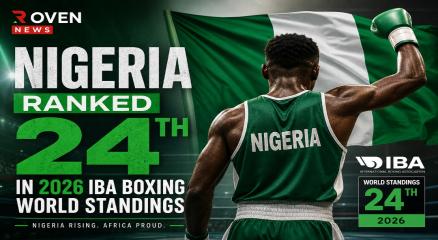
Nigeria has made significant strides in the global boxing arena, as evidenced by its recent ranking of 24th in the 2026 International Boxing Association (IBA) world standings. This achievement marks a significant improvement from previous years, showcasing the dedication and hard work of Nigerian boxers, coaches, and support staff. The IBA rankings, which consider fighters' performance, skill level, and competition record, are a testament to how far Nigerian boxing has come in the international sphere. The rise in rankings can be attributed to the increased investment in training facilities, the nurturing of young talent, and the implementation of strategic development programs that focus on honing skills and fostering competitiveness. Historically, Nigeria has a rich history in boxing, with multiple athletes making their mark on the sport both locally and internationally. The legacy of well-known figures like Dick Tiger and Samuel Peter continues to motivate and inspire the next generation. Over the years, numerous boxing academies and clubs in Nigeria have emerged, contributing to the nurturing and development of promising young talents. Collaborative initiatives with international boxing bodies have opened doors for exposure and experiences that were previously out of reach. Such efforts have resulted in Nigerian boxers gaining invaluable exposure and learning opportunities that are crucial for development. Looking forward, the prospects for Nigerian boxing seem exceptionally bright, with expectations to climb even higher in future IBA rankings. Continued government support, private sector involvement, and international partnerships are pivotal in maintaining this upward trajectory. Moreover, the increased interest in boxing among Nigerian youths provides a fertile ground for scouting and cultivating new talents. The nation's sports federations remain committed to providing the necessary resources and infrastructure to further strengthen Nigeria's position on the global stage. As Nigeria continues to forge a strong reputation in the boxing world, it stands as an inspirational story of growth and determination, not just for its athletes but for the nation as a whole.
Ecobank and the Nigerian Chess Federation (NCF) are gearing up to host the highly anticipated 2026 National Schools Team Chess Championship, an event that promises to be a significant milestone for young chess enthusiasts across the country. This partnership between a leading financial institution and a national sports body underscores the increasing recognition of chess as a vital educational and competitive activity. The championship is designed to discover and nurture budding talents at the school level, providing a platform to enhance strategic thinking, concentration, and intellectual growth in young minds. With a focus on inclusivity, the event aims to reach schools across diverse regions, ensuring a broad range of participation that reflects the nation’s demographic diversity. In preparation for the 2026 championship, both Ecobank and the NCF are dedicated to establishing a conducive environment that encourages the development of chess skills among students. Workshops, training sessions, and preliminary competitions at various educational institutions will be organized ahead of the national event. These initiatives are expected to not only heighten interest in chess but also lay the groundwork for a competitive and vibrant chess community in Nigeria. By providing resources and training, the initiative hopes to empower schools to integrate chess into their extracurricular programs, thereby fostering an enduring culture of strategic excellence and intellectual curiosity among young learners. The upcoming championship is not just about competition but about community and connection. Ecobank's involvement reinforces its commitment to corporate social responsibility and investment in youth development. As schools prepare to participate, excitement is already building within educational circles, with teachers and students eager to showcase their abilities on a national stage. With national and international representatives from the chess community expected to attend, the 2026 National Schools Team Chess Championship is set to be a pivotal moment in Nigeria’s chess calendar. As anticipation grows, stakeholders remain optimistic that this event will inspire a new generation of chess players, cultivating skills that transcend the chessboard and contribute to broader personal and academic success.
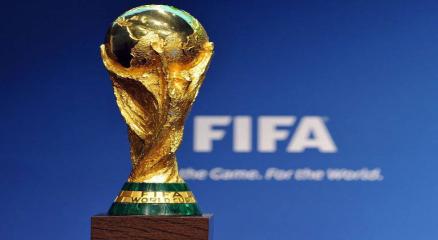
The FIFA World Cup is the pinnacle of international football, capturing the hearts of millions worldwide. However, not every nation has always had a seamless relationship with the tournament. One notable example is Argentina in 1974, which came close to boycotting the World Cup due to political turmoil. During this period, the country was under a military dictatorship, leading to significant unrest and concerns about political protest risks. The team and its supporters were on edge as they grappled with whether to participate amid such instability. Ultimately, after much deliberation, Argentina decided to compete, but the incident remains a poignant reminder of how politics can nearly derail sporting aspirations. Another instance occurred with the Dutch team in 1978, when they were set to compete in Argentina. There was considerable debate among players and team officials about whether to participate in the tournament due to the host nation's human rights record under the same military regime that year. Prominent players and political figures in the Netherlands voiced their concerns, leading to a robust national debate. Although the Netherlands eventually took part in the tournament, the controversy highlighted how sports and ethical considerations can often stand at cross purposes, revealing the deep dilemmas nations face when engaging on the world stage. South Africa’s near withdrawal from the 2010 World Cup also garnered attention, albeit for different reasons. Despite being the host nation, there were growing concerns about whether the country could meet the logistical and financial demands of hosting such a colossal event. Political and financial instability, coupled with domestic criticism about the allocation of resources, almost led to the country stepping away from its hosting duties. Nevertheless, bolstered by a strong government and FIFA's reassurance, South Africa persevered and eventually succeeded in hosting a memorable tournament. This episode underscores the complexities and high stakes involved in staging global sporting events, where the pressures extend beyond mere performance on the field.